Author Archives: standickinson

Portraits–draft statement

Everyman Stan


In the last post, I said that I would produce a draft of an ‘Artist’s Statement’ for the Portraits series.  The Google search that I reported on there did help, by providing me with a ‘way in’; and some of those reflections helped to confirm what the series is ‘all about’.  So I did produce a ‘draft’, which I shared with some of my fellow students, via Flickr.  I did get a little bit of feedback, and I’ve subsequently left it to lie for a couple of weeks.  Going back to it today, I’ve felt that it is ‘fit for purpose’.  I made one minor amendment, but the version here is likely to form part of my Assignment Three submission.

I am conscious, on re-reading, that it poses an awful lot of questions and seems to range over a wide territory – but that’s how I feel about this Body of Work.  Above anything else, and this goes for the Studio Projects as well, my interest lies in the mysterious relationship between Photography and the Real.  My Contextual Studies – both theoretical and practical, taking in Philosophy and Psychoanalysis along the way – confirm that this remains mysterious, perhaps even more so, in the so-called ‘digital age’.  That is what I’m trying to explore through the Body of Work – but more along the lines of creating uncertainty in the mind of the viewer than suggesting that there might be answers.  I don’t know whether, come assessment, that might look like a ‘cop-out’ – but I am genuinely more interested in having viewers of my work feel puzzled than informed, uplifted, amused, etc.  Hence the form of the draft statement.

Portraits–Contextual Research & Reflection

As part of my Contextual Studies (though ‘Struggles’ might be a better title!) I have been in e-mail exchange with my tutors for both modules over the last few weeks.  I don’t propose to get into the detail here, but the essence of it is a continuing difficulty that I seem to have in clearly articulating the link between the Body of Work that I’m producing and the relevant and appropriate ‘Context’.  I don’t have a problem with the work I’m producing; I don’t have a problem with the background ‘theory’ that I’m studying; I don’t have a problem with finding photographic, and other, artistic comparisons; but wrapping all of that together into a structured form for all aspects of my Body of Work is proving tough (for me, anyway!).  One agreed action is that, as part of my next BoW Assignment, I will produce a ‘draft’ Artist Statement/Proposal that might, for the time being, focus on the Portraits. (I have pretty much concluded in my own mind that these are Portraits that happen to feature me, rather than portraits of me.)

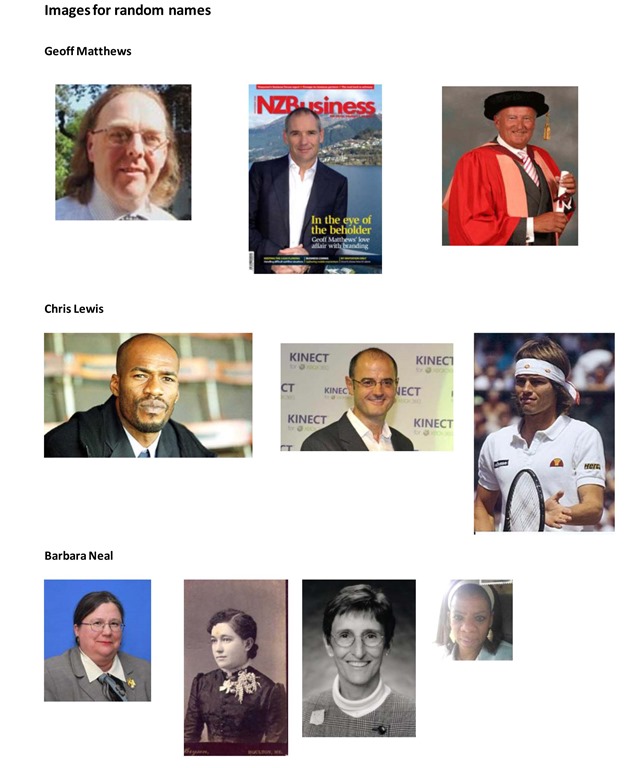
Looking for a way to get into that statement, I was reflecting on the Portraits’ relevance to, or relationship with, the billions of photographic images that are being used to represent ‘identity’ across the internet.  The line I was taking was … ‘Google my name and some of these versions of my identity come up … so why do we attach any credence to the images that come up against any other name Googled …?’  Needs expanding, but it is a possible line, at least.  To back that up with a bit of further research, I ‘created’ eight ‘random’ names (by writing various first names and surnames down on pieces of paper and combining them at random).  It certainly wasn’t scientific, but I thought I would then enter each of those names into Google Images and see what came up.  I simply copied the photos of each of the first three or four under each name, into a document, as follows:

Images - others-1

Images - others-2

Images - others-3

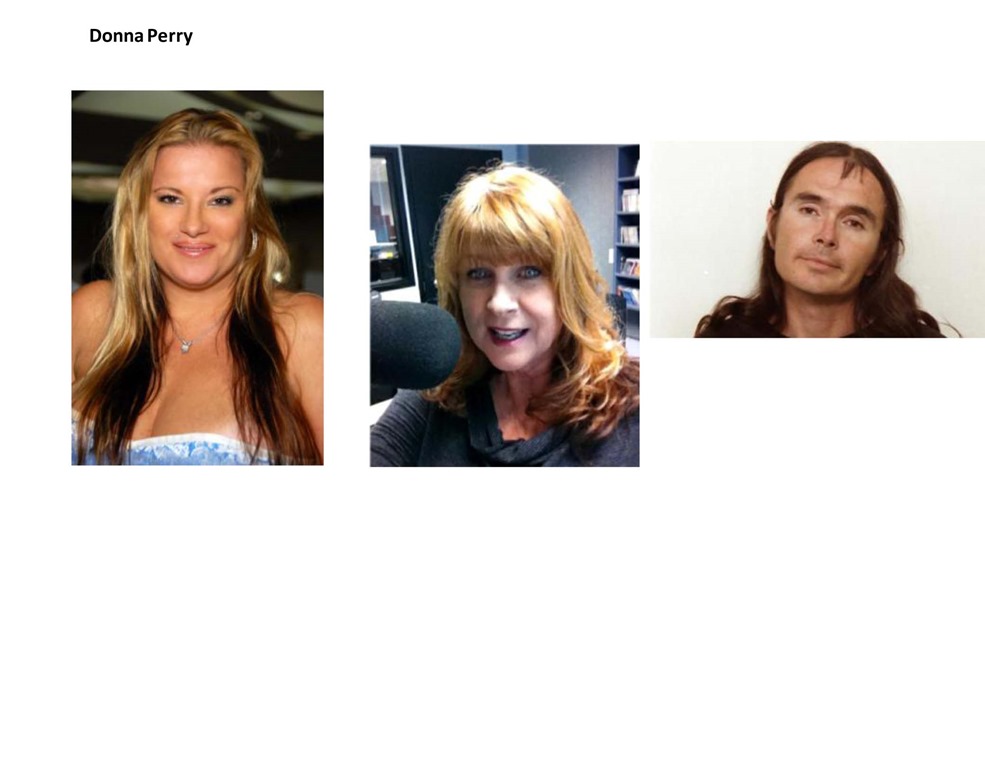
These names were, I stress, created randomly.  I had guessed, and this confirms, that one can quickly generate a range of posed portraits, publicity shots, selfies created on the phone, scanned images from the archive, snapshots, news photos etc (as in my own Portraits).  I haven’t included any supporting text here, but the range of backgrounds is enormous, for such a small sample – business, academic, sport, broadcasting, ‘celebrity’, glamour model (try picking that one out!) and (amazingly) serial killer!  And, naturally, many are simple social media images with little or no supporting information.  Strangely, I also sense some degree of ‘pattern’, if that’s the right word, under each name!  If you want to be famous, don’t use the name Fiona Kerry, for example – though Chris Lewis might be a promising choice!

Does it help me to contextualise my own Portraits?  It is certainly part of my purpose to explore the manner in which the photographic portrait image is used to present identity in the 21st century.  Studying the psychoanalytical angle on identity – Lacan, particularly – tells us that the whole formation of our ego/identity is based on the image, and a misread image, at that.  This little piece of work demonstrates something of the way in which we present ourselves, visually, to the ‘rest of the world’ (as loosely defined by the internet!).  And, superficially at least, the perceived indexical photograph is at the heart of matters.  Yet Photography is going through an uncertain, self-conscious process of navel-gazing – certainly in some quarters – and is perhaps even less ‘reliable’ than it ever was as a basis for representation (of ‘reality’, ‘truth’ etc).  My own Portraits hope to demonstrate how easy it is to represent ‘identity’ through digital photographic processes, yet how unreliable they are at representing something to which we can lend any credence at all.

At another level, many, if not all, of these images, circling the hyper-real world of the internet, are never meant to be anything more than superficial representations anyway.  The selfies on social media get changed regularly; the publicity shots of any celebrity are myriad, so take your choice of identity.  At which point, these images and the billions of others in the ‘soup’ from whence they came, might become representative of the fruitless search for the lost ‘something’ to which we are all, again according to psychoanalytics, condemned.  I have already documented that one original drive for these self-portraits (deliberately dropped that word back in) came from a personal observation that nothing had ever happened to me, none of the (supposed) trauma that artists often point to as the source of their inspiration for a particular piece of work, or indeed their whole body of work.  And another was the ‘disconnect’ between the stories in my old Newsbook and the person I seem to be now.

I have, though, resisted – and continue to resist – the idea that these Portraits are about ‘me’ (beyond the simple notion that there is something of all of us in all of our creative work).  They could also, though, be read – rather like the collection above – as a random cross-section of characters from ‘today’.  Whilst they are masquerade/fiction, they could, because they retain a loose link to ‘reality’, be interpreted as a commentary on where the ‘baby-boomers’ are today.  Coming almost full-circle, I have always intended that the images themselves would be just ‘seductive’ enough to tempt the viewer to see some element of ‘reality’ in there, be it about ‘me’, themselves, their generation, or friends and family.  And we return to the seductive yet unreliable photographic image.

I don’t know whether this is getting me closer to resolving matters. It’s proving to be a tough journey – perhaps no tougher than I expected but certainly tougher in a different way.

One for Harry

I have nine (self) portraits now and, with the exception of ‘Old Stan’, the drunk, (maybe even that one, too, to an extent) there has been an element of fun about most of them.  They have certainly provided some amusement to most people who have seen them.  It has never been my intention to avoid that, but it has always been my intention that there would be a serious element, too.  I could envisage that, in whatever form they are eventually presented, there would be some images that would puncture the fun, reflecting life, I guess.  ‘Old Stan’ would be one of those; and my next planned portrait could be even more powerful, if I get it right.

I am, though, aware that I can begin to step into sensitive areas.  I have already shelved one planned image because it was going to cause concern to some family members – that of the retired teacher accused of indecent assault.  Even the fiction was potentially uncomfortable to some family members; and I understand & respect that.  I am planning that my next image will be of a stroke victim – ‘Granddad Stan’, a birthday snap, photographed by his young grandson.  More than 150,000 strokes happen every year in the UK – mostly to over 65s (my next birthday).  When I was 60 I was (like many) identified as having high cholesterol and have been taking ‘statins’ since then.  That significantly reduces my stroke risk – but it might have happened and does happen to those of my age.  It happened (admittedly at a slightly older age) to my Uncle Harry.

Harry & Ed 1985

This is Harry, with our son, photographed in the summer of 1985.  In the photograph, he is about 71 and a more cheerful, gregarious, talkative, active septuagenarian would have been hard to find.  Interested in pretty much anything, always teasing, he loved to stay up-to-date, liked to get out and about, and was very involved with, and supportive to me when I was a child.  Not long after this photograph, whilst on his way to or from (I can’t recall which) Blackpool, by bus, on his own and surrounded by strangers, he had a huge stroke.  He lived until around 1994, when he died, aged 80 – but he never went home again, to the cottage where he’d lived all his life (apart from serving in the Merchant Navy); he only ever walked, with assistance, around the care home; and, most devastating, he never spoke or smiled again.

I have told Harry’s story to emphasise that I will be producing this next image with serious intent.  ‘Granddad Stan’ will have suffered a stroke within the last twelve months.  It will have damaged the left side of his brain, meaning that his right side has been paralysed, his speech has gone, and there is a lack of expression in his face.  There is every prospect, with therapy, that he may eventually recover some or all of his faculties, but in the short term, he often feels hopeless and depressed – even on his birthday, with his grandson visiting.  It requires a ‘performance’ from me, as have all the others; I have done my research, but I don’t yet know when I’m going to shoot it.  This is by way of a statement of (serious) intent, lest anyone get the impression that I am being light-hearted about it.

Blackpool Stan–the story

Blackpool Stan

Blackpool Stan

Here is the latest in the (self) portrait series (still haven’t fully resolved that!) – Blackpool Stan – and this post records the way that the image has developed to its ‘final’ form.  All of the portraits have gone through varying degrees of planning & preparation and, thinking ahead to assessment, it is probably useful and sensible to record that development process in at least some cases.

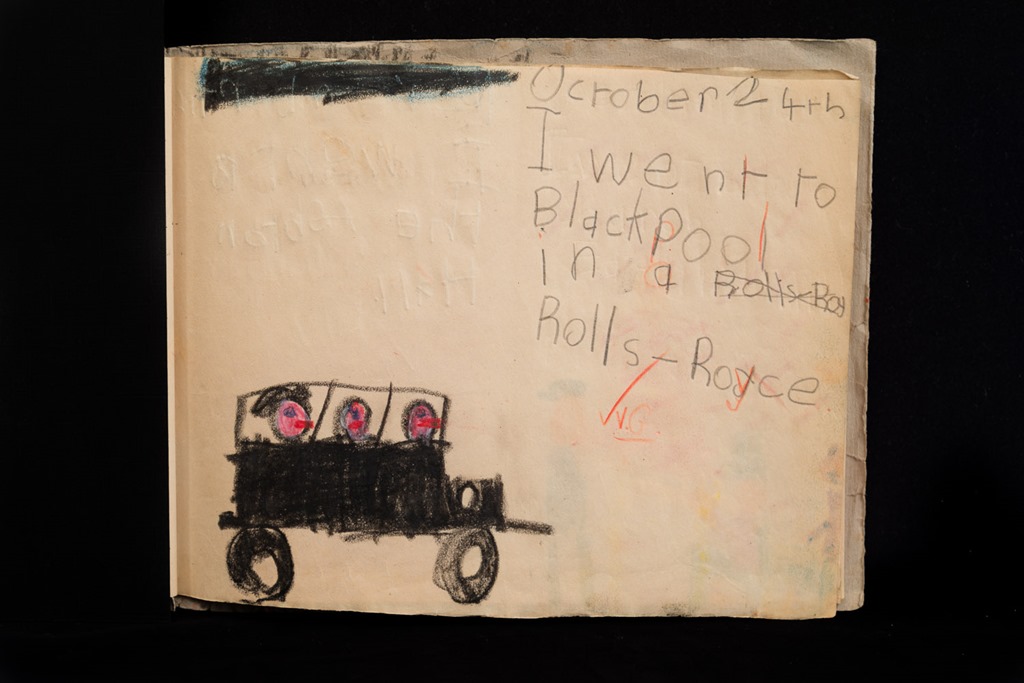
The origins of this image go all the way back to October 24th 1955 – or the weekend before that, to be precise.  As recorded in his Newsbook (see below), little Stanley, aged 5, was taken on a day trip to Blackpool, riding in a Rolls Royce.  Not quite so grand is it may sound, I should stress; we didn’t have a car at all!  A neighbour and relative ran a wedding car business and had a vintage Roller in which we occasionally got taken out on trips.  This is the picture I drew and slightly messy note that I wrote about it the following Monday.

Newsbook - Rolls Royce

As recorded some time back – here – the old Newsbook supplied part of the initial inspiration for this series of portraits, and this particular entry always seemed to have potential for a response.  I imagined a version of me who had been drawn to the bright lights and fun of Blackpool (I grew up 12 miles up the coast); who had left school at 16 and gone to work in the amusement arcades, become a bit of a ‘Stan the Man’, and eventually built up his own ‘empire’ of leisure venues (!).  The original thought was that I would photograph him with his own Rolls Royce; thus completing the link with the Newsbook.

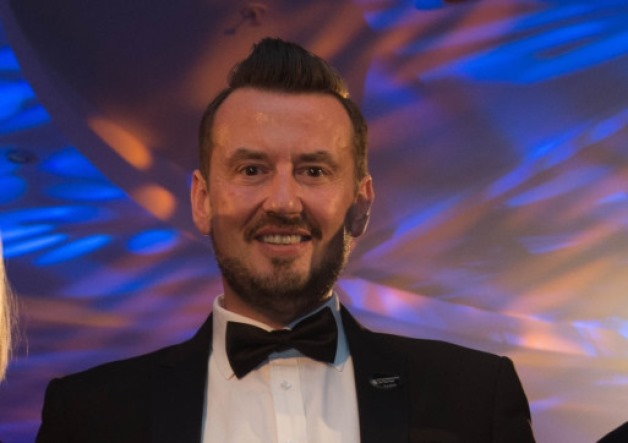
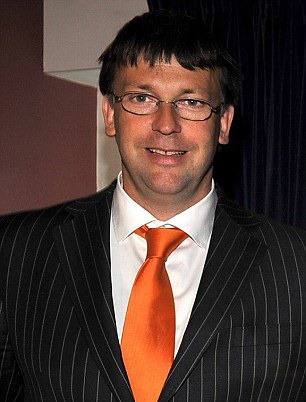
Back in July, I did some online research as to just what a ‘Blackpool entrepreneur’ might look like.  I knew about the Oystons, estate agents, owners of Blackpool Football Club, and with a slightly ‘dodgy’ record; and my research turned up photos of them, but it also unearthed some other interesting characters.  Here, without going into full details, are some of the images I found.

Geoffrey Thompson owner pleasure beach died 67 in 2004 Stephen Thorpe Blackpool businessman entrepreneur award

Owen Oyston Karl Oyston

Basil Newby MBE opened blackpools first gay club 1979

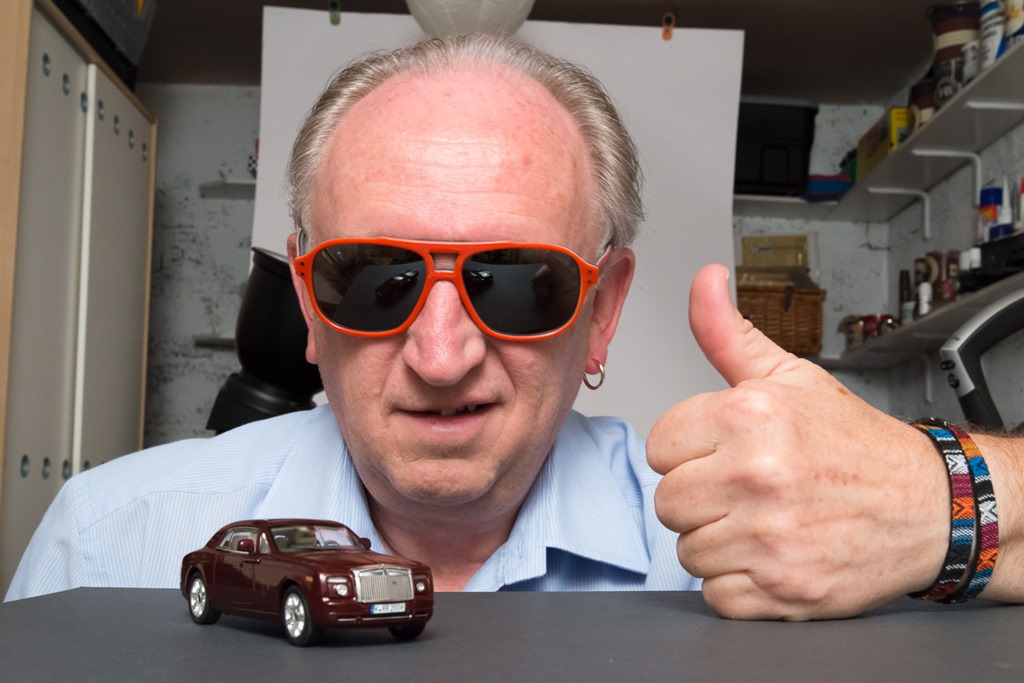
A jovial, slightly roguish, slightly ‘dodgy’ bunch – all showmen, one suspects, and, in the case of the last one, awarded an MBE for services to charity.  That (together with the difficulties of procuring an actual Rolls Royce for the photo-shoot) led me to slightly revise the back-story on Blackpool Stan.  He had always craved his ‘Roller’ but, when he could afford one, decided to give the money to charity instead.  I could then use a token model vehicle in the image.  I sourced a die-cast model of a Rolls Royce via e-Bay – more difficult and more expensive than when little Stanley used to collect Corgi toys, I might say – and some other props such as a ‘loud’ pair of reflective sunglasses with orange frames (the colour is significant, as those with football knowledge will realise – see tie in photo above, for example), a pair of ‘pretend-pierced’ earrings from Claire’s Accessories (one of which would be worn, significantly, in the left ear), and a colourful woven wristband from Top Shop (hinting at a touch of the ‘hippy’).  (At Claire’s, I also purchased a blonde (temporary) hair colour, but changed my mind about using it.)

The ‘look’ seemed to work but, before going to Blackpool to do the shot, I wanted to have a good idea of how I would frame and set up the composition, as well as researching potential locations via Google Street View.  The broad idea was to have the model car in the foreground and, if possible, Blackpool Tower in the background, but I decided to trial a ‘set-up’ at home first – in the ‘studio’.  Some experimentation with camera angles etc led to this image.

Blackpool Stan Planning

I needed to get all the ‘props’ in the frame, leaving space for the Tower, and to be able to operate the shutter release discretely.  The car is on a piece of card, on the end of a carrying case for my studio lights, which was useful because I could take the case ‘on location’, and I am kneeling behind it.  The ‘thumbs-up’ seemed in character and gave me an excuse to bring the wristbands into shot.  Any camera reflection in the sunglasses is hidden in the dark shadows.The Street View research for a location wasn’t too successful.  I knew that there would be somewhere on the Promenade that would work but didn’t want to spend ages trundling my ‘kit’ up and down to find it.  I did, though, manage to find some images taken from the North Pier, which had the Tower in the background at what looked as though it would be the right angle.  I was, though, a little concerned about the direction of the sun, should it shine (for once!) in Blackpool when I was there.

It did!  And I was right!  When I arrived mid-morning, it was directly behind the Tower for a shot in the direction I needed.  I had a Plan B in mind, which involved a cup of coffee to kill some time and experimentation with a shot from the other direction, with the Tower reflected in the lens of the glasses instead.  A lot of trial and error with head and camera angles produced this version.

Blackpool Stan - Version

In bright sunlight, the possibilities for reviewing what I’d got via the camera screen were limited.  I probably exposed around 20 images to get the set-up right and another 10 or so to cover different options.  By then the sun had moved around a little and the possibility of shooting my original composition had returned.  (I might add that the whole process was accompanied by a soundtrack of Sixties music over the North Pier’s PA system, as though they knew it was the music of Blackpool Stan’s youth, and subjected to occasional interruptions by inquisitive tourists.)

Switching the set-up around, I then exposed another 20-30 images to get the framing right, to eliminate reflection of the sun onto the lens, and to minimise the reflection of the camera in the lens of the glasses (though that was always going to happen, to a degree).  The whole process on the pier took around one and a half hours and I had about sixty images from which to make final selections.

Back home, a review in Lightroom soon edited the numbers down to a handful where the expression, composition, hair (it was inevitably breezy), reflections etc were acceptable – and I did, at one stage, fear that I might need a return visit to get it right.  The final image, presented at the beginning of this post, has also had a fair bit of work in Photoshop.  There have been separate ‘Curves’ adjustments to various parts of the image to get the balance of the exposures, contrast etc to a more acceptable level; and the ‘Clone’ tool has been used to completely remove the reflections of the camera in each of the lenses of the sunglasses.  One ‘happy accident’ is the juxtaposition of the curve of my thumb with its own reflection and then the curve of my hair as it blew in the breeze.  The potential ‘symbolism’ of the Tower and the raised thumb, with the earring I was aware of before the shoot.

So – a lot of work and planning to produce what is intended to look like a fairly casual shot taken by a local photographer for use in the local newspaper!  Could it ‘work’ as a representation of a ‘real’ Blackpool entrepreneur, alongside the examples I had researched?  I think probably ’yes’, it could.  Does it demonstrate the power of the photographic image to create an illusion of identity and/or the illusory nature of what we think of as ‘identity’?  Could it ‘seduce’ the casual viewer to believe in ‘Blackpool Stan’?  Is it a hyper-real simulation?  Am I, also, just a collection of signifiers, like this image of ‘Blackpool Stan’?

Nice one, Joan!

Surface Charge Theory 4

Surface Charge Theory 4

As the tumbleweed rolls across the screen of this blog and I peer through the cobwebs …!

It is almost two months since I last posted on here.  It has not been an unproductive period; there is progress on some further portraits and more studio-based work has emerged, including the image above.  But it has also been a period of mental struggle; primarily with Contextual Studies and how to articulate some meaningful connection between what I have read/studied and the work I am producing.  It isn’t that I haven’t been able to deal with what I’ve read/studied (though it can certainly be demanding at times); and it isn’t that I can’t feel a connection with my Body of Work (I certainly can feel it, and quite powerfully at times).  It is the structuring and articulation that has been a problem – and remains so, to an extent.  I can identify any number of reasons – the differences between the two broad strands of my BoW, which might fit differently into a theoretical/critical context; an excessive concern with the clarity of articulation when, in a creative context, such issues are inevitably far from clear; a tussle with moving from the general to the specific in a complex situation; plain old muddled thinking, maybe (or maybe not …)!  Whatever the reason (or reasons), it has been heavy going at times, but I am making some progress.

Which brings me to Joan Fontcuberta.  A few weeks ago, I bought the new translation of his book of essays Pandora’s Camera, and I’ve just finished an initial read through.  I had sensed that it might help with my contextual struggles, partly because of Fontcuberta’s oeuvre, which frequently operates within the spaces in and around photography and fiction, but especially because these essays deal with the digital technological shift and, as the title suggests, explore the extent to which it spells calamity for some and liberation for others.  (I have not, as yet, been able to see ‘Stranger Than Fiction’ at the Science Museum, but it is coming up to Bradford eventually.)

This post is prompted, primarily, by the last essay in the book, entitled ‘Why do we call it love when we mean sex?’.  It has nothing to do with either love or sex, of course, but (having got our attention!) it does focus on the challenges/opportunities for photography today – and it seems to link effectively with some of my other reading/studies, so helping to confirm and clarify where I am going.  For, as he puts it, “… artists and other toilers in the vineyard of the image …”, photography, at its birth, could be seen as a pure translation of visual reality onto a surface, in an instant, extraneous to the human will (beyond a ‘superintendent’ role performed by the photographer).  The history since that point has not, Fontcuberta asserts, been well-written – notably in its apparent failure to successfully integrate pictorialism into a coherent narrative.  Photography has retained its documentary association.  The hybridisation of image-making in the postmodern context in the 70’s/80’s provided a new challenge to that old association but it is the introduction of digital technology and image processing software that has “… transformed the original paradigm …”.

The essay compares the pixels to a painter’s brush-strokes and suggests a return to “… the iconic structure of painting and writing …”.  Indeed, he goes a step further and asserts that “… analogue photography is inscribed and digital photography is written …” – inscription and writing being two stages of epistemological competence, from description to story.  Hence, he says, the crisis of the documentary in photography.  The essay has opened with a provocative quote from artist Christian Boltanski, addressing a meeting at an Arles Photo Festival – “Photography is photojournalism; everything else is painting”.  So, at his conclusion, Fontcuberta accepts that we may be ‘post photography’ and that (for once) finding the right nomenclature for what follows could be important.  But, until an angel appears to give us the answer, he wonders why we insist on calling it love when we mean sex!

The notion that digital image manipulation has much in common with painting compares directly with another article – Lucas Blalock, writing in Foam Magazine, in the Spring of this year, where he compares his work to drawing.  It’s why I put Surface Charge Theory 4 at the top of this article.  This image pushes my appropriation and manipulation of material from A Textbook of Photographic Chemistry to another level, so that it begins to look more like a Bridget Riley painting than a photograph.  It may yet go through further stages of development that bring it back into the still-life/photographic/realism space – but these creative processes, like those of Blalock and others, are concerned with the very edges of what is ‘photography’.

It seems possible that, as I had hoped, Joan Fontcuberta has helped bridge the gap.  I have Hal Foster in The Return of the Real explaining the recurring role of the avant-garde in shifting art into new directions;  I have Vilem Flusser in Towards a Philosophy of Photography extolling the role of the ‘experimental photographer’ who is “… playing against the camera …”;  I have Fontcuberta confirming that the original paradigm has been transformed; I have Charlotte Cotton (in that same Spring edition of Foam magazine) writing that the works of Lucas Blalock and others “… are active contemplations of the role of the artist and the meaning of the photographic within the evolution of our visual and cultural climate …” (and also referring to signs of human mark-making and painterly gestures when describing the work).  I am, perhaps, beginning to find relevant contexts through which to articulate what I am doing and where I am going with my Body of Work.

I can still, however, express a word or two of caution – such as whether this is still all too general to work effectively in Contextual Studies (though that should be for consideration elsewhere, of course) and whether my portrait work does really sit comfortably in the context described.  But the very fact that I am articulating something in the ‘public domain’ is progress.

Whoof … there go a few more cobwebs!

Self Portraits–Planning

Alnwick July 2014

Not the next self-portrait!  A bit of nonsense with one of the water features at Alnwick Gardens last week!

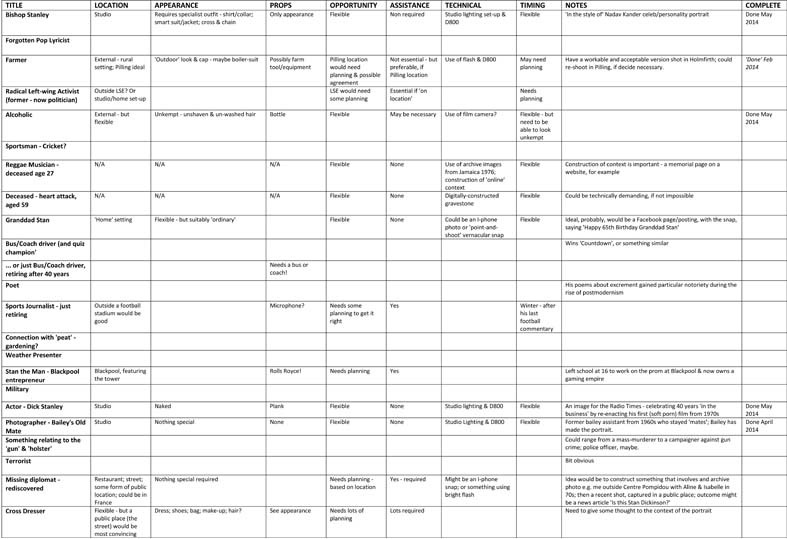
However, I have been doing some thinking and preliminary planning for the next steps in the self-portrait series. (Still calling them that, for the time being, since everyone seems to insist that they are!)  As I’ve suggested before, I envisage ending up with something approaching (or in excess of) 20 to work with; so, with five under the belt, I still have a fair way to go. But, looking back through various lists etc that I have scribbled since starting the project, I can identify as many as 25 possibilities in total; not all will come to fruition, but there’s enough to keep me going & so I have put them all together, including the five completed, into a ‘schedule’ that I can work with & use as a control document over the coming months. It’s here – though not the whole document, just an idea of how it is working:

Microsoft Word - Portraits Planning Schedule

My next overall objective is to submit another assignment in the Autumn – late September, or October – and I would like to have about another seven completed portraits to submit by then.  Up to now, I have been ‘unveiling’ them on Flickr as I’ve gone along, with the five so far; but I think it’s time to be specific, here, about which ones I’m planning to work on next.  So, here, in no particular order, are the five that I would like to complete over the next 2-3 months:

Reggae musician, died of gunshot wounds in Trenchtown, Jamaica, aged 27 – this will use an archive image of me, in Jamaica, in my 20s, and I see it as some form of memorial website page.

Granddad Stan – a ‘Happy 65th Birthday’ vernacular image, maybe featured in a Facebook posting.

Stan the Man – left school at 16 & went to work on the Blackpool Prom amusements; now owns a gaming empire; location for this is obvious; appearance needs a bit more thought.

Missing diplomat, rediscovered – might end up being a mock-up news story combining an archive image just before he ‘disappeared’ in the 70s, with a dubious image of him spotted in a public place (restaurant) recently – location of first will be France, second to be thought about (though I will be in France again late August). Moscow would be ideal – maybe I can ‘create’ a ‘Moscow’!

Cross Dresser – I’m going to need some assistance putting this one together; and to really work, it will ideally be shot in a public place. (No pressure there, then!)

Going to Court – returning to a more serious ‘theme’ that seems to be emerging from ‘my generation’; this individual has been retired from teaching for five years, but his ‘peace’ has been interrupted by two charges of indecent assault on teenage girls, dating back to the 70s.

The Recruiter – Maybe some wishful thinking about this one because it’s a character (and I can see his like every time I go to Leeds, or any other city for that matter – gelled hair, suit, open neck shirt, maybe a loud shirt, the toes of his pointy shoes pointing at at 45 degrees!) – but he’s just sold his recruitment business for £40m.

Right, that’s the plan for the next phase.  Clearly some are quite ‘desk-based’ and others need me to get out and do some location work.  All need research and planning, but I think that it’s achievable over the next 2-3 months.

Double Androgyny

Firstly, a ‘thanks’ to Peter, CS tutor, who pointed me in the direction of the work of Roni Horn.  It wasn’t a name familiar to me but she is a fascinating artist who works in a variety of media, including sculpture, drawing and photography.  There isn’t a convenient link that shows off her work – hardly surprising, given its variety – but, on Peter’s recommendation, I got hold of a copy of the catalogue of “Roni Horn aka Roni Horn” her Tate Modern retrospective of 2009 – link to exhibition site – from the library.  It’s some catalogue!  Two sizeable hardback books, one with images of the works and the second, called ‘Subject Index’, with a series of alphabetically indexed writings that include short quotes from her, short essays on her work by a variety of people, interesting references that she has chosen to share, the occasional poem, more illustrations, and a whiff of tongue-in-cheek humour along the way.  Her work has taken a bit of fathoming, but I understand why Peter suggested I look at it because there is a lot about identity, which links well with my ‘self-portrait’ work.  I’ll come back to that later.

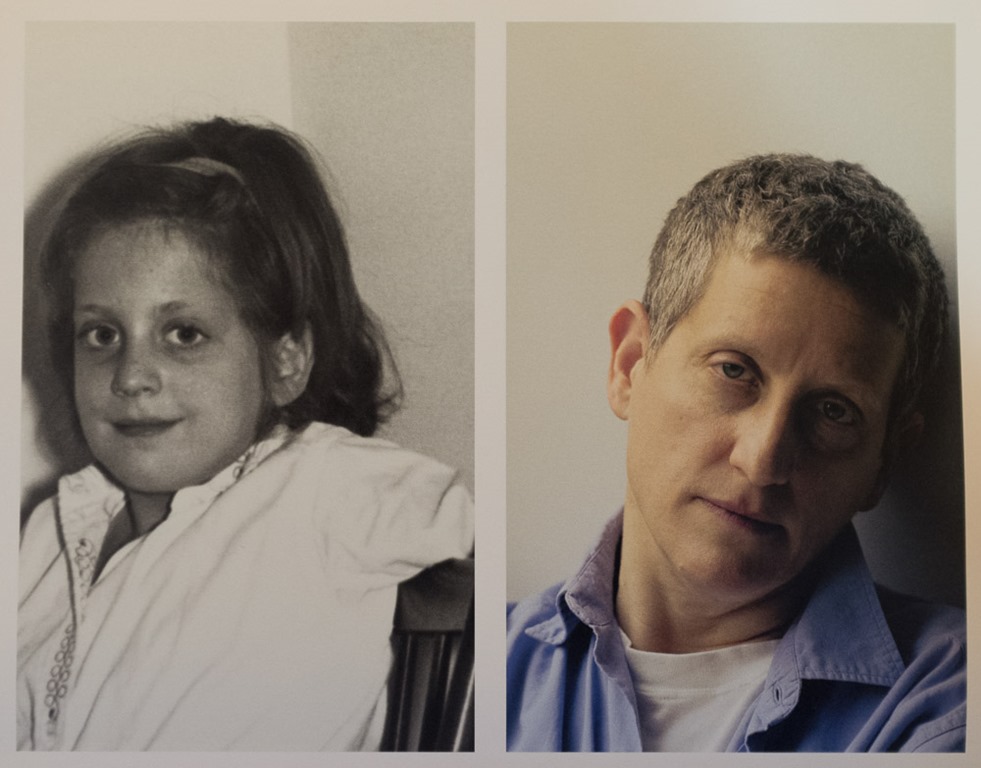
I’m actually going to start with some photographs that appear in both books and were used at the introduction to the exhibition.  They’re not taken by her, however; they are photographs of her, taken at various stages in her life, and presented in pairs in this context.  That idea of pairs, and the consequent questions of comparison/difference, is a theme throughout her work – including the drawing and sculpture.  I can’t find all the portrait pairs on the internet, so I’ve been a little cheeky and photographed the book.  here is one example.
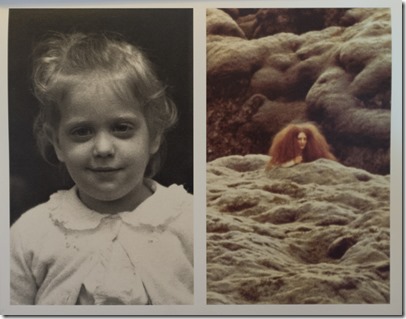
Roni Horn aka-1

From – ‘Roni Horn aka Roni Horn: Subject Index” – Whitney Museum of American Art 2009

The mono portrait of the little blonde girl in her frilly dress and cardigan alongside the blurry image of (probably) a teenager, peering from behind a rock and almost obscured by a mass of red hair; we know it’s the same person but, interestingly, the child holds us with a kind of winning, knowing combination of gaze and wry smile whilst the teenager recedes and hides, shyly, behind her protective rock.  Turn over the page, and we get this pair.

Roni Horn aka-2

From – ‘Roni Horn aka Roni Horn: Subject Index” – Whitney Museum of American Art 2009

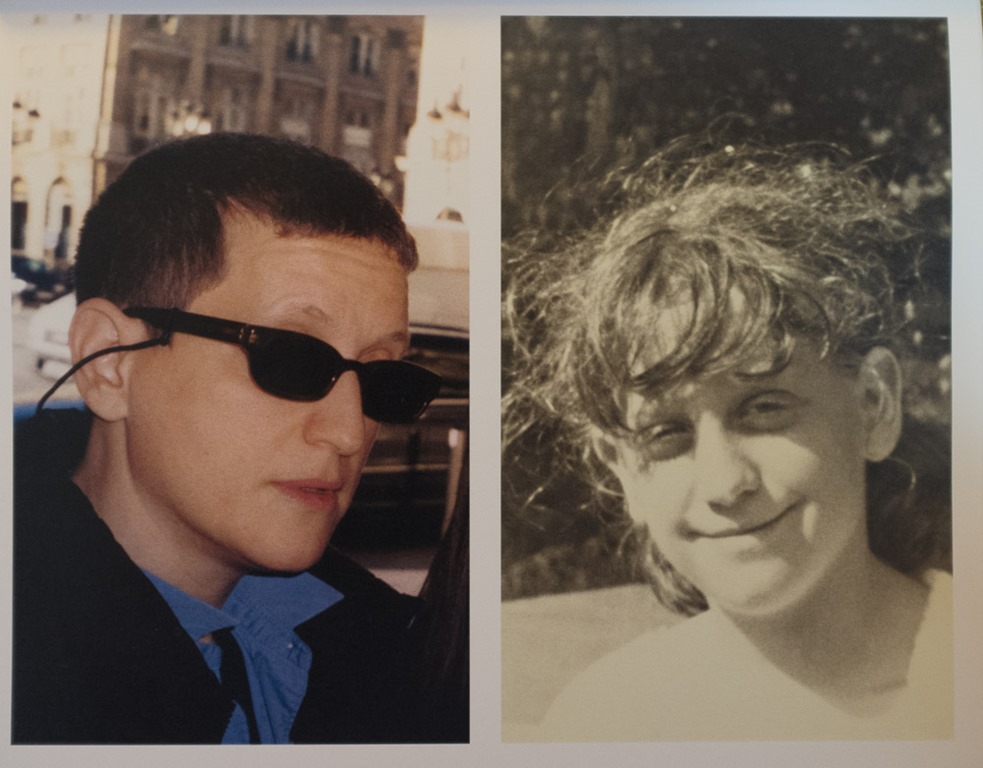
The order switches round – older then younger.  On the left is a ‘cool’, ‘sharp’, androgynous individual in shades, with close-cropped hair, smooth skin, and turned-up collar, glancing at us, slightly open-mouthed but expressionless, as she/he is photographed in a city street.  Whilst on the right, a younger version of the ‘teenager’ smiles willingly but a little falsely, eyes narrowed and barely visible under a tangle of hair – all soft, uncertain edges and with no clearly discernable profile.  (And, are those dark, troubled patches under the eyes?)  Then, at the back of the book (these images are used as untitled end-marks), is this wistful pairing.
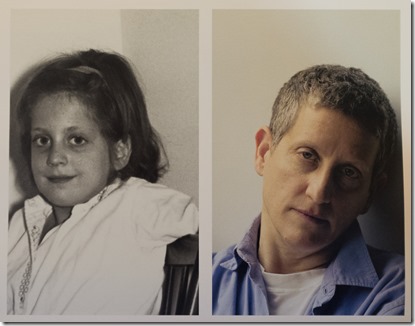
Roni Horn aka-3

From – ‘Roni Horn aka Roni Horn: Subject Index” – Whitney Museum of American Art 2009

A slightly older version of the little girl sits, arm tucked over the back of a chair, giving us the quietly confident, knowing stare again, besides an older version of the androgynous she/he.  Without the shades now, the portrait on the right fixes us with that same knowing look, but with a hint of weariness, the head lolling against a wall.  Knowing, as we do, that all these photographs are of the same person, we go searching for signs of similarity, difference, development, change.  Interesting, then, to see what Roni Horn has to say about ‘identity’.  The word gets more than one entry in ‘Subject Index’, and in one of them she says “The mutable version of identity is not an aberration … the fixed version is the aberration”.  Later, she speaks of “… the impossibility of pure identity … you will always be a form of me”.  In an interview (here), she talks about life as a ‘labyrinth’, which may have a way in and a way out but also has lots of routes that don’t lead to either.  She says “… that is your life: you don’t arrive anywhere”.

I suspect that, potentially, much of her work, of whatever form, involves questions about identity – even the sculptures and drawings – and the pairings appear everywhere e.g. ‘Things that happen again’; but another photographic project that is of particular interest to me is ‘Portrait of an Image (with Isabelle Huppert)’.  Horn invited actress Isabelle Huppert (as far as I can tell, they didn’t particularly know each other before) to be photographed  ‘impersonating’ herself in film roles that she had performed over the 30 years of her career.  In the same interview linked above, Horn says there was “something about the absurdity of impersonating yourself, which I think is actually real because self is not a singular thing – it never is” and “… the idea that you could impersonate yourself isn’t an absurdity, but a real active way of being present in the world”.  So, Huppert was being asked to reflect back, in performances for Horn’s camera, to find expressions, attitudes, feelings, gazes that belonged to those roles.

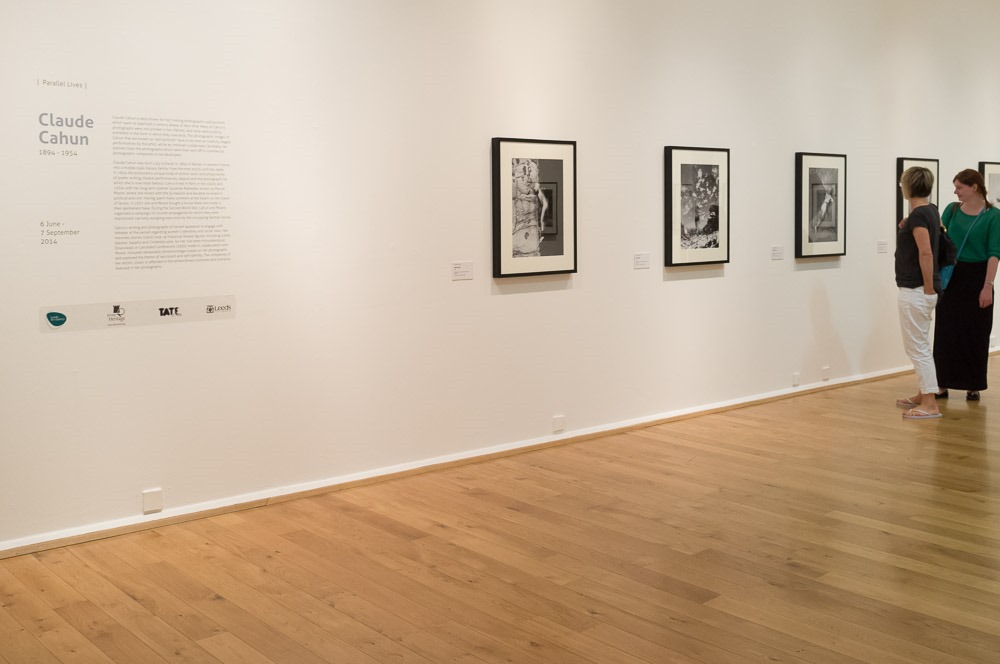
There is an article about Horn’s work on the Tate website, by art critic Elizabeth Lebovici – ‘Faces that speak volumes’ – in which she makes a comparison with another artist who ‘performed’ for the photographic apparatus – and one who defined herself in a ‘third gender’ – Claude Cahun.  By one of those quirky coincidences, two weeks ago and before I had been introduced to Horn’s work, I saw an exhibition of Claude Cahun’s images at Leeds Art Gallery (and had first encountered her in the ‘Angels of Anarchy: Women Artists and Surrealism’ exhibition at Manchester Art Gallery some years ago).

Cahun - Leeds

As Leborici points out, Cahun’s photographs, particularly those of herself in a variety of roles/identities, are actually the outcome of collaborations with her life-long partner, Marcel Moore. She was usually, it seems, the person behind the camera.  These works provoke some questions that are also running through my own mind in relation to my ‘self-portraits’.  (The now frequent use of inverted commas is no coincidence!)  Is her art performance art?  Given that she is in roles other than her own, can they be self-portraits?  (And that question can be extended, particularly, if we acknowledge that she didn’t look through the camera and press the shutter.)  But, given that Cahun was born Lucy Schwabb yet spent most of her life being Claude Cahun, does that alter the notions of performance and self?  What was her own identity?  Which leads us back to Roni Horn’s view that identity is impossible to pin down in any pure sense.

At present, in so far as it matters, I am inclined to think that my own work involves the use of photographic processes, together with my own body and some ‘props’, to create portraits which evoke the sense of ‘real’, recognisable (through all sorts of signification) identities.  These are not portraits of any version of ‘Stan’ that has ever existed, or ever will exist.  They are fictitious ‘real’ identities.  That could lead me to the view that I should refer to them as ‘portraits’.  Of course, it would be possible to take the view that these are portraits of me performing in the roles (back to the Horn/Huppert collaboration) and, since I have organised the whole set-up and, in all cases so far, pressed the shutter, they might be ‘self-portraits’.  However, I tend to feel that the question of ‘intent’ comes into play here.  And I do not intend them to be representations of any identity that is directly connected to a ‘Stan’ that I ‘perform’ or ‘have performed’ or ‘intend to perform’ – other than in this creative process.  Once my ‘authorship’ is complete, some viewers will no doubt read some element of ‘truth’ into the images; that is the nature of photography (and art).  But that is outside my control.  (And – if they don’t read at least some degree of ‘truth’, my process will not have succeeded in its objective!)

Assignment Two–Feedback

I have received my feedback for Assignment Two and the message seems to be broadly along the lines of ‘Young Mr Grace’ from “Are Your Being Served?”, who used to visit the Grace Bros store with his voluptuous (not sure if that word is acceptable these days!!) nurse and announce “You’re all doing very well!”.  Not that I would compare Clive with ‘Young Mr Grace’, of course!

A little more seriously, the feedback is that I seem to be heading in the right direction so keep on with it.  I’m happy with that and also agree with the more significant point from the feedback, which is that I will, eventually, need to be able to present and explain a more direct and coherent link with the theoretical context in Contextual Studies.  I am beginning to see some broad direction in that but it needs more focus and some drilling down into how it specifically links with my projects.  Those reflections are, however, for elsewhere.

One point worth recording here is that I am beginning to sense that the two broad project areas – loosely defined as the Self-Portraits and the Studio Work – are actually not so different from each other, and might turn out to be closely related aspects of the same overall project.  Photography seems to work in creative spaces that are ideal for subversion and avant-gard questioning of the ‘norms’ associated with visual art and culture.  Digital developments make the ground beneath those norms seem even less secure.  All the images that I have been producing seem to work in this (good grief, I am about to borrow a phrase from the world of cricket! Geoffrey Boycott no less!) ‘corridor of uncertainty’.  Images that may evoke the ‘real’, that may quote from the familiar forms of cultural representation, which may tempt the viewer to look and reflect, but which, fundamentally, have no meaning.  At this stage, I don’t want to go any further than those general observations.  I have some notions of where this is taking me but it is through more reading and reflection in my Contextual Studies that I may hope to progress.

At which point, quietly congratulating myself on managing to quote from “Are You Being Served?” and “Test Match Special” in one short blog post, I will get my nose into some books!

Studio Work–Tapes and other work–Update

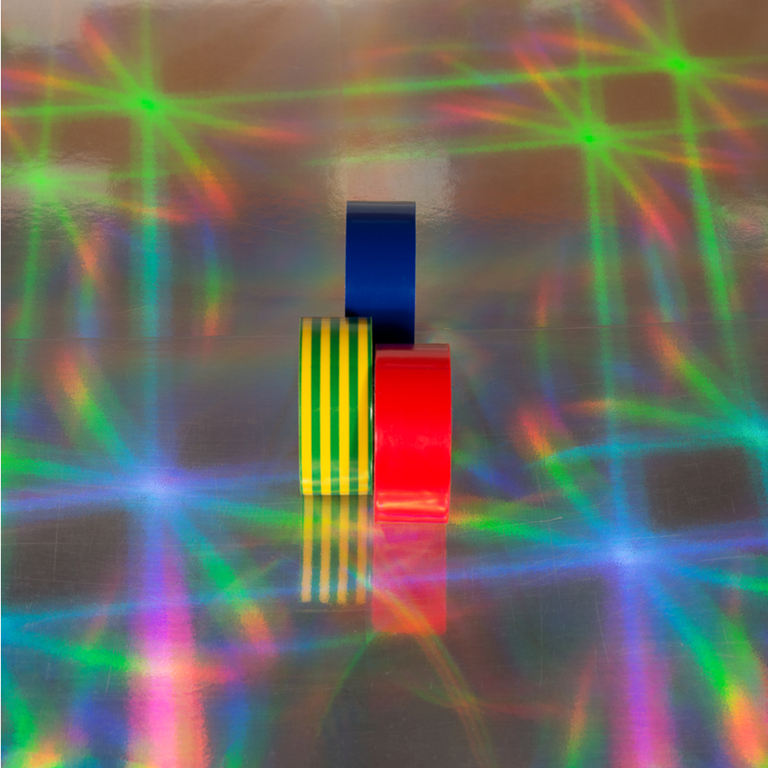
I wrote about a mini-series of studio images that I called ‘Tapes’ in this blog post – here. Looking back, I feel less enthusiastic about the notion of ‘meaning’ than I did in that post; but I do think that some/all of the images ‘work’ as part of this overall Studio Work Project that I am developing. These three, for example:

image  imageimage.png

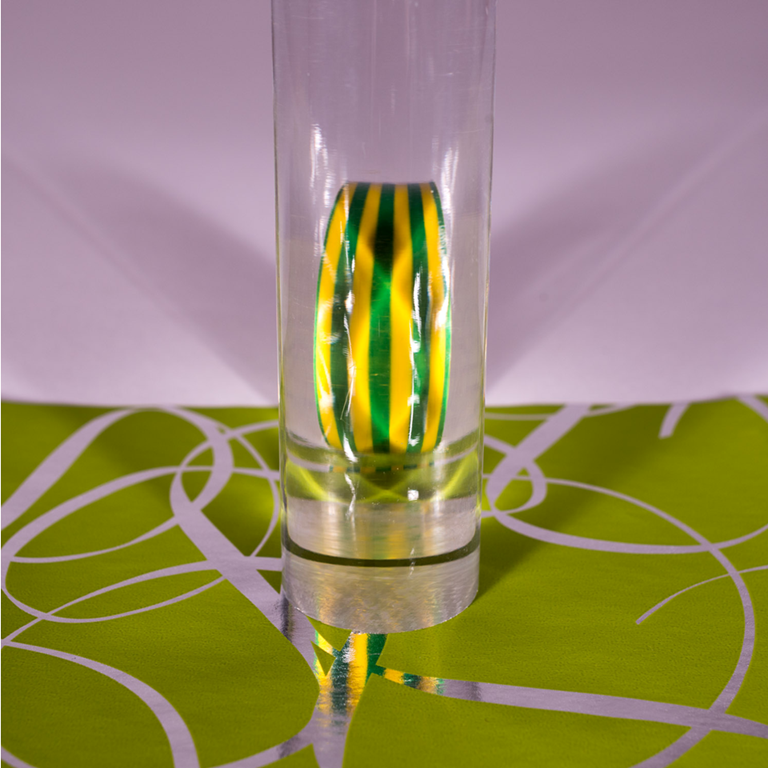
They have some positive aesthetic qualities and are likely to pose questions in the viewer’s mind. I could see them as part of a gallery exhibition or within a sequence of these studio images, in book form. I did some more work with my green & yellow ‘earth tape’. He (what was I saying about meaning!) appeared in another studio ‘still-life’, for example:

image

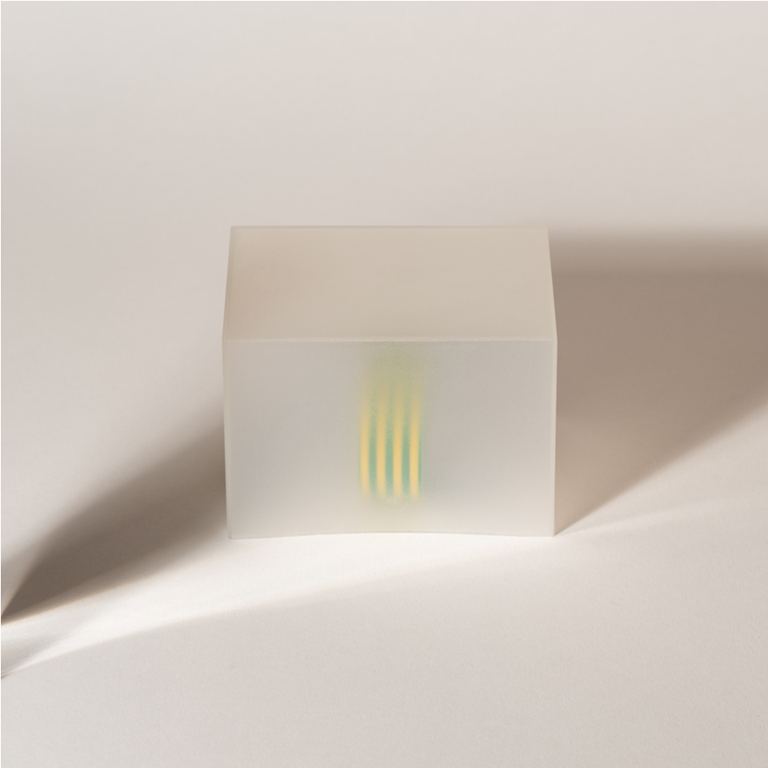
Here he’s working with some more ‘trash’ – an old piece of wrapping paper and two ‘cut-offs’ from transparent curtain poles. I suppose that I am exploring a still-life aesthetic here that is frequently used in the world of advertising – careful lighting and composition designed to glorify an expensive perfume brand, some jewellery or a leather handbag. Applying that same approach to various pieces of rubbish that are lying around on my shelves is a way of undermining the notion of brand prestige. In a way that is similar to the creation of identity in my self-portraits, I am creating spectacle from nothing – using simple lighting and the magical powers of photographic image-making.

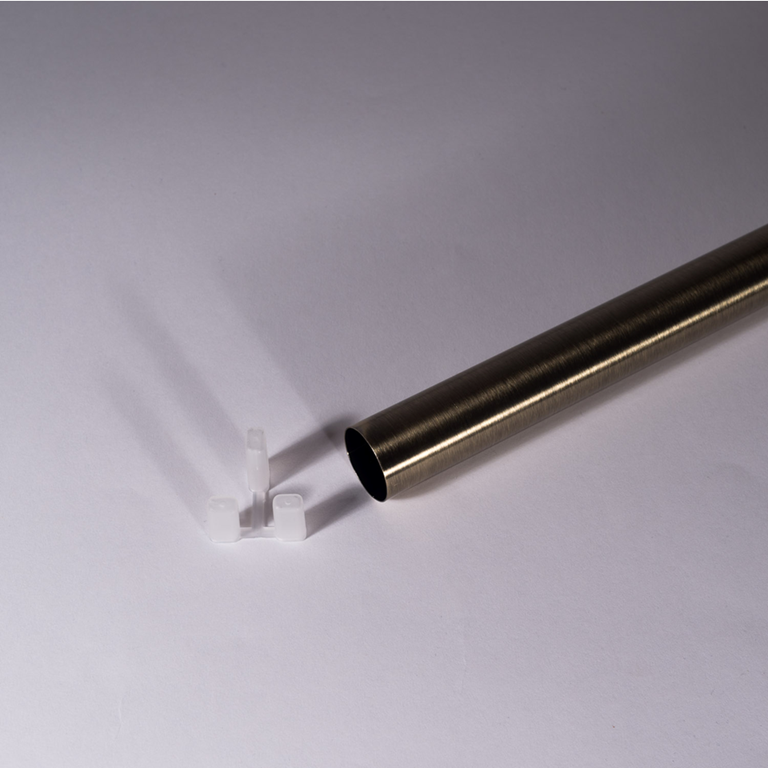
One of the plastic cut-offs and the wrapping paper came together in this heavily Photoshopped spectacle. And another discarded metal curtain pole, with a very humble bit of plastic packaging met under seductive lighting in this image.

image image

Another idea in my mind, in this context, is the importance of ‘spaces’. It occurred to me that in setting up some of these studio projects I am, in effect, creating spaces in which some form of photographic action is deemed to take place. The image below came about as a result of that idea – the old cardboard box is the empty space (stage?) into which I place the ‘players’ with a view to making an interesting (if meaningless?) assemblage.

image

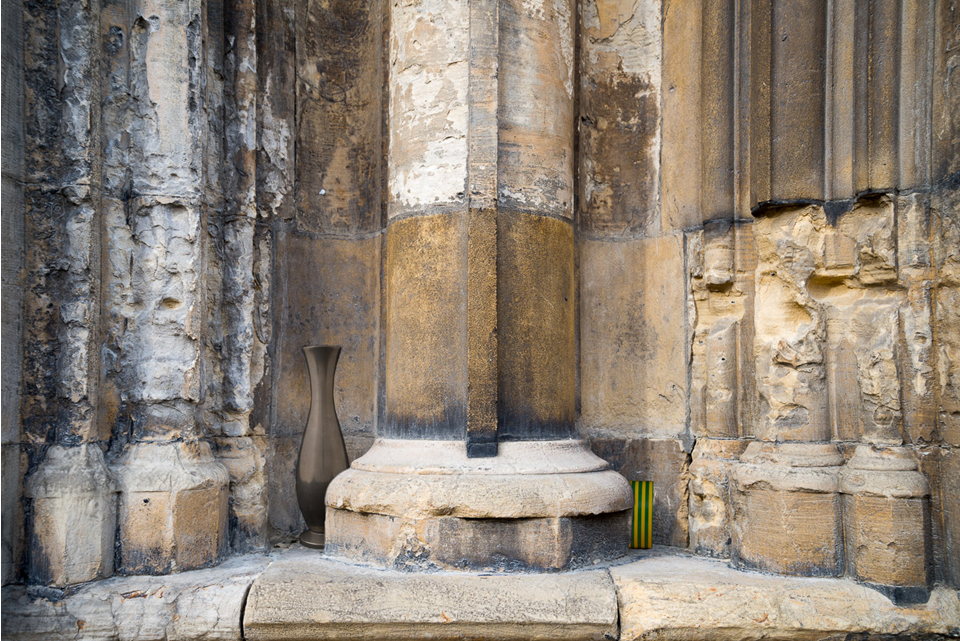
That has set me thinking about the potential to collect ‘spaces’ from the outside world, into which I can place my scenes. I photographed an innocent-looking space outside York Minster, into which some familiar characters emerged, back ‘in the studio’.

image

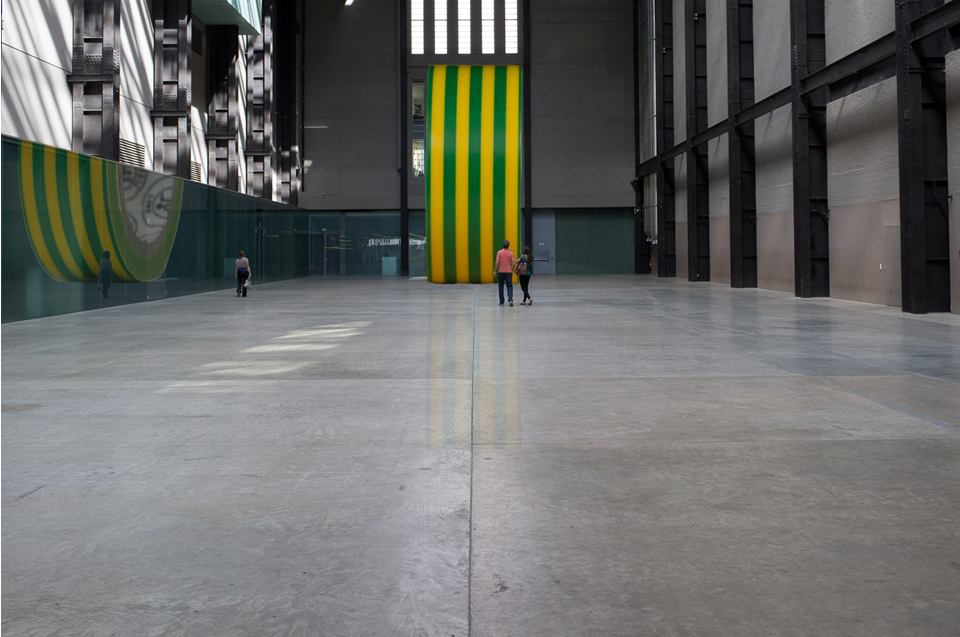
And then, a special opportunity arose to capture a famous ‘space’ at the Tate Modern – the Turbine Hall. It was empty, apart from three ‘expectant’ viewers – so I have given them something to look at.

image

I feel that there is some potential in this idea of collecting ‘spaces’, particularly this empty exhibition space. Thinking, contextually, about the importance of the curatorial influences in art; about some of the contextual essays that I’ve been looking at in Contextual Studies – Solomon-Godeau, Crimp etc; not sure whether this can go further as part of the Studio Projects or whether it is a separate project of its own, or even whether it is worth pursuing at all.

So, the experimentation continues. I must admit to a degree of uncertainty, though. I enjoy the work – both the making and some of the outcomes – but I have a concern about what, if anything, it means to anybody else. There doesn’t seem to be a great deal of focus to it – spurts of ideas that produce a few interesting images and then on to something else which may or may not extend from what I had been doing before. Part of me feels that, providing I keep going with it, there will be something worthwhile emerging at the end; but another part feels that I might just be ‘playing at it’ and would do well to change tack to something more straightforward. My next step is to put together an assignment submission, which will include my self-portraits and the ‘best’ of what is emerging from these studio projects. That process will, in itself, help with my thinking – and there will be Clive’s feedback, of course.

Studio Work–‘Textbook Project’–An Update

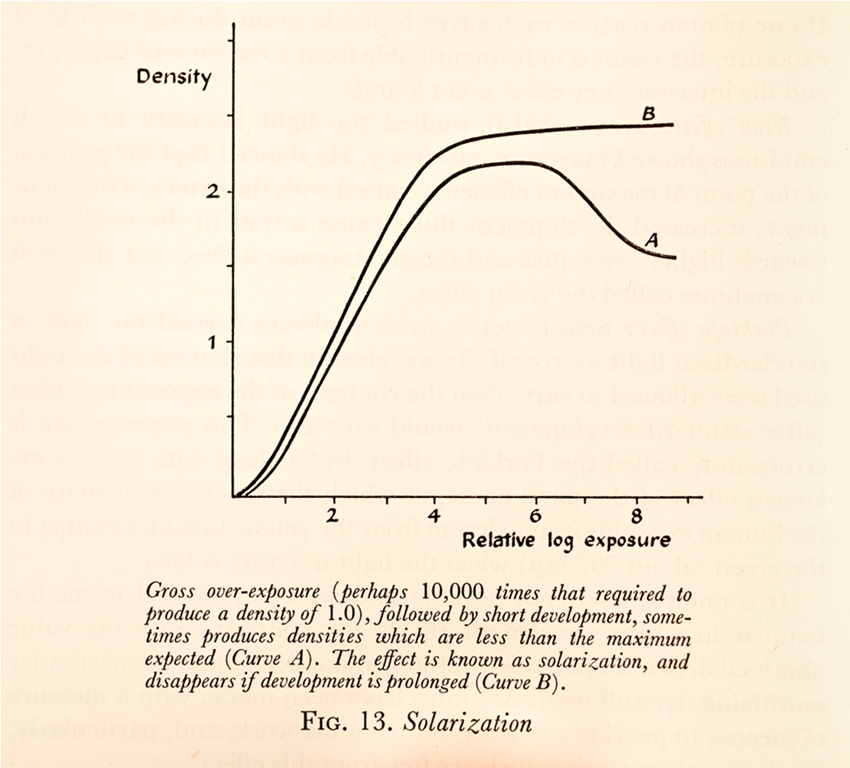
I have already written about the beginnings of this project here; and about some contextual considerations for it here. However, it has moved forward, with images that have become increasingly layered and complex as I’ve tried to push the ideas further. What I am doing here is to use the book, a 1963 publication entitled “A Textbook of Photographic Chemistry”, which I acquired in a local second had book shop, as a trigger from which to experiment with digital photography and transformation. I have written before that the book reads like a foreign (and perhaps ‘dead’) language to me; so bringing the material into a contemporary digital image-making context is like lifting its signs and signification from its original purpose – appropriating it – to create new significance. Some recent work starts with this diagrammatical representation of the process of solarization in film photography.

image

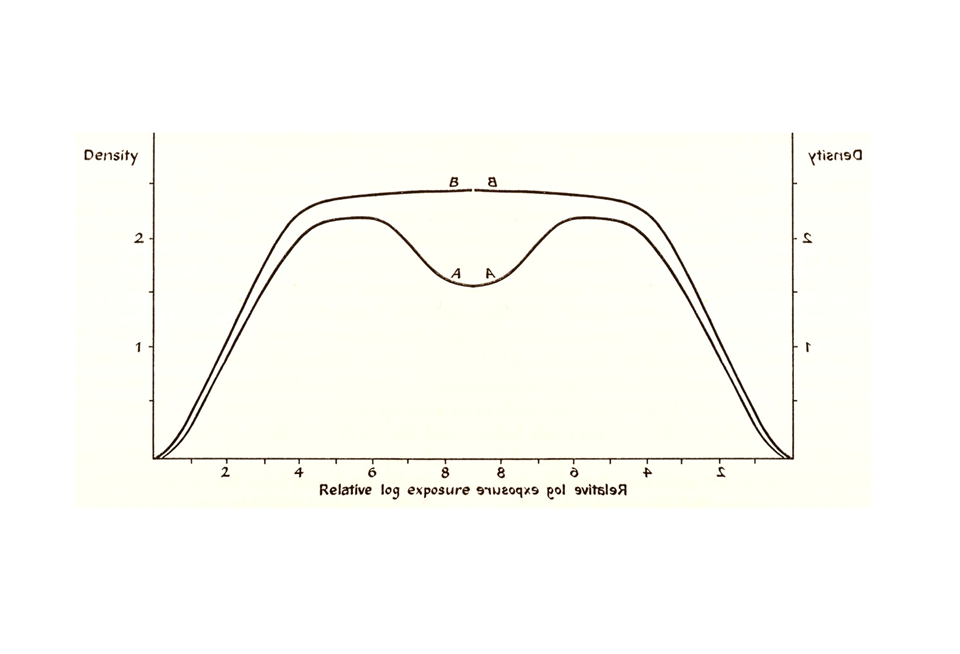
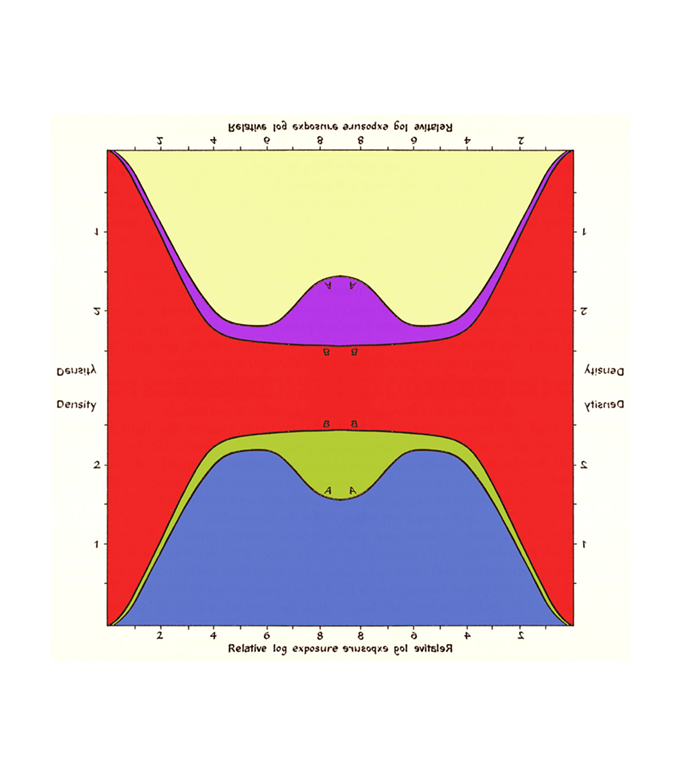
It is a term that crops up in digital contexts, of course – but as a standard Photoshop filter that seeks to imitate the analogue effect. It is also associated with Surrealist experimentation with photographic processes, notably by Man Ray. However, nothing of that is of any consequence to the way that I have sought to use it. I decided to explore the potential in the shapes in the graph itself; resulting in the following transformations:

image    image

The colourisation has been done in Photoshop, with the colour choices being entirely ‘instinctive’! I found the resulting form interesting and could see potential to go a step further by creating a repeating pattern. The process took me back to junior school days and printing patterns with cut-out potatoes. Wonder whether people still do it! After a few iterations, this was the outcome. I have to admit that I was delighted with it – reminded me of some sort of fabric print for cushions and curtains in the 1950s/1960s.

image

I printed it out at about 28cm x 28cm and used it as the basis for another piece of experimentation. I’ve been thinking about the flat surface of photographic prints and whether I could use some of the ‘cutting’ that I’ve applied elsewhere to create a third dimension. So I went to work on the blue shape, transforming its size and dimensions then printing and cutting multiple copies that I could layer onto the surface. The result, applied to one part of the pattern, is visible in this image:

image

I’ve also re-introduced the original solarization theme by adding a copy of another appropriated image from the book, to which I have applied the standard Photoshop solarization filter. It’s crude and unsophisticated, deliberately printed onto ordinary paper and curled, to retain this contrast between old and new – and, if I admit the truth, to confuse and subvert the whole process of image-making! I find this process of applying layers of manipulation and development interesting and I enjoy the complex and sometimes challenging nature of the outcomes.

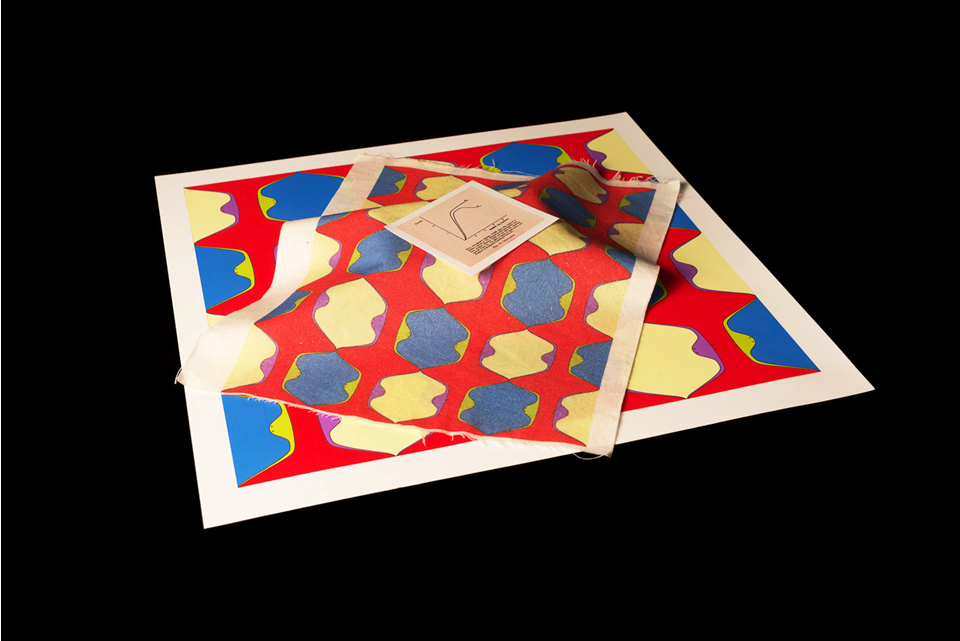
Picking up, then, on the idea that this pattern reminded me of a mid-twentieth century interior design fabric, I went on to print the pattern onto a piece of fabric (using some fabric that is specially designed for use with inkjet printers – a process used by quilters to incorporate photographs into quilts). The fabric was a pretty basic piece of cotton and it soon began to fray at the edges, which added a new and unexpected element! The following image combines this fabric version with the original paper print – and the very diagram from which this process started.

image

The composition is laid on a piece of black velvet so that it seems to float in a kind of surreal manner, but with simple ‘still-life’-like side lighting. But I’ve then taken the fabric print on to another stage of transformation – re-photographing it, extracting it from its background and making it the top layer of a new image in Photoshop, beneath which I’ve layered copies of the original digital pattern and copies of the original graphical shape, which are then ‘revealed’ with some crude use of the Photoshop eraser.

image

This is certainly a strange image, designed to confuse the eye and confound analysis. The strange process of experimentation that has led to this point is, I feel, in a long line of such experimentation – by Surrealist photographic artists in the first half of the 20th C and by the contemporary photographic artists such as those I have quoted before (and who have been recently featured in the latest edition of Foam magazine – see here).

I find the process fascinating, and I want to continue to push these ideas. I am somewhat unsure as to the reaction from other people. Can viewers see any value or interest? Is anyone, other than me, remotely interested in this form of exploration? I have no idea! I wouldn’t say ‘… and I don’t care …’ because I do, actually, but taking some risks and experimenting with what feels interesting is a crucial part of the creative process, I think. No idea where this is all going, but I just read a reassuring quote in Hotshoe magazine – Roe Etheridge is quoting something that one of his influences, Jim Jarmusch said to him … “It’s hard to get lost when you don’t know where you’re going.”