Category Archives: Reflection

‘Thinking With’ – My Photography – Progress Report 1

Six weeks since my conversation with Clive; about five since my early reflections on ‘Genres’ & ‘Thinking With’ rather than ‘About’; some posts about research on Genres (Thinking About!); Christmas has intervened; but no photographs!  What’s been going on?  Actually, I’ve had those words in my mind, a mantra to which I’ve kept returning; and I have been taking photographs/making images, some of which I’ve shared with fellow students on Flickr. Mostly, from mid-December, I’ve tried to free up my mind & take photographs, just to see whether themes/ideas/concepts/purposes/meanings emerged.  In the last 24 hours, I’ve poured out a stream on consciousness into my notebook, exploring what might be going on.  I’m not going to repeat all thoughts in this blog, but communicating my thinking is going to take three or four posts, of which this is the first.

To start with a photograph – I took this one about a month ago …
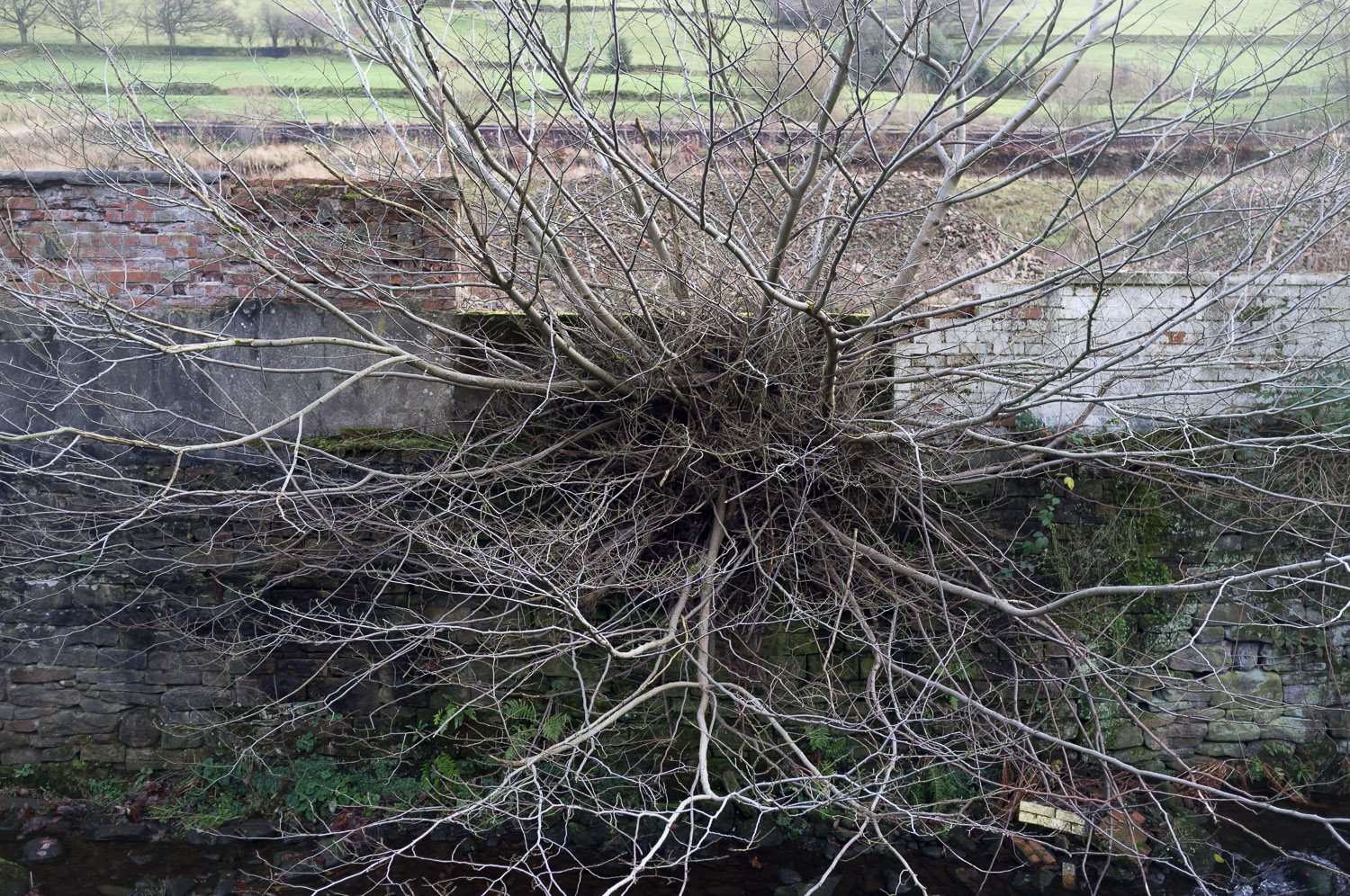
About Why 01 - Out of Nowhere “Out of Nowhere”

Out for a walk on my own; had picked up the camera, hoping to do some ‘thinking with’ … letting my mind relax; opening my eyes to see what I see; just photograph what I want … regardless.  I called it “Out of Nowhere” (later, when reflecting) – the wish to photograph it came out of nowhere; the tree is growing out of nowhere; and out of nowhere I was away, taking some pictures.  Why photograph it?  It made me think of an explosion, actually, but I needed to be careful not to start thinking ‘about’.  THINK WITH … take photographs & think afterwards!

About Why 02 - Its complicated “It’s complicated”

It isn’t easy!  Six years of studying and learning to think ‘about’ gets in the way; it almost gets easier to think and not photograph.  What made me take photographs when it didn’t matter?  Seeing abstract shapes, forms colours, patterns, textures in the landscape …  Not being a painter or drawer. photography gave me the means to record and communicate these things.

Sometimes, the strangest connections just happen …
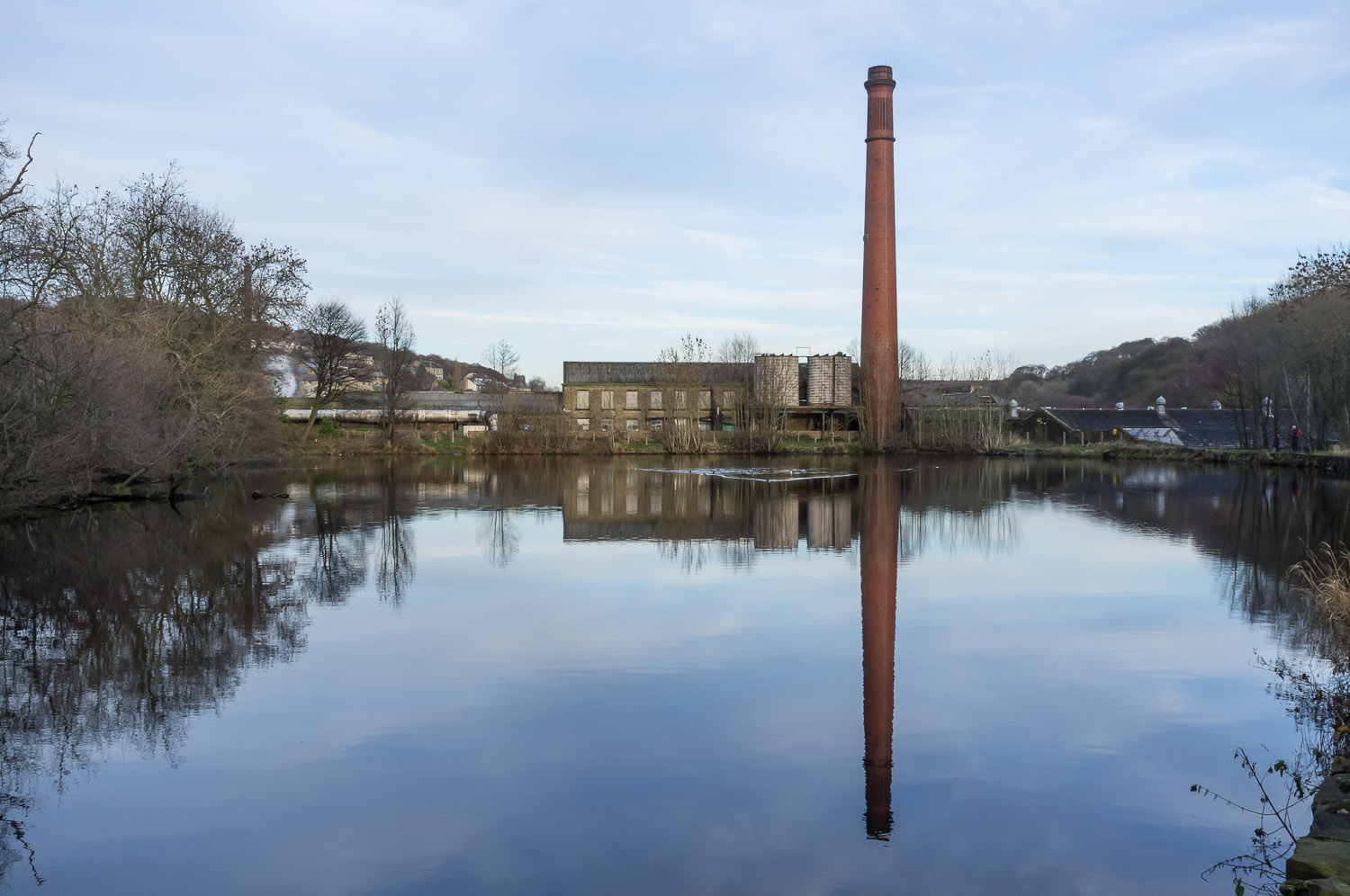
About Why 06 - Why not

Plastic on Wire

There is no connection at all, of course, other than a sort of accidental, formal one, in my own mind; a convenient one that I choose to make.  Like …
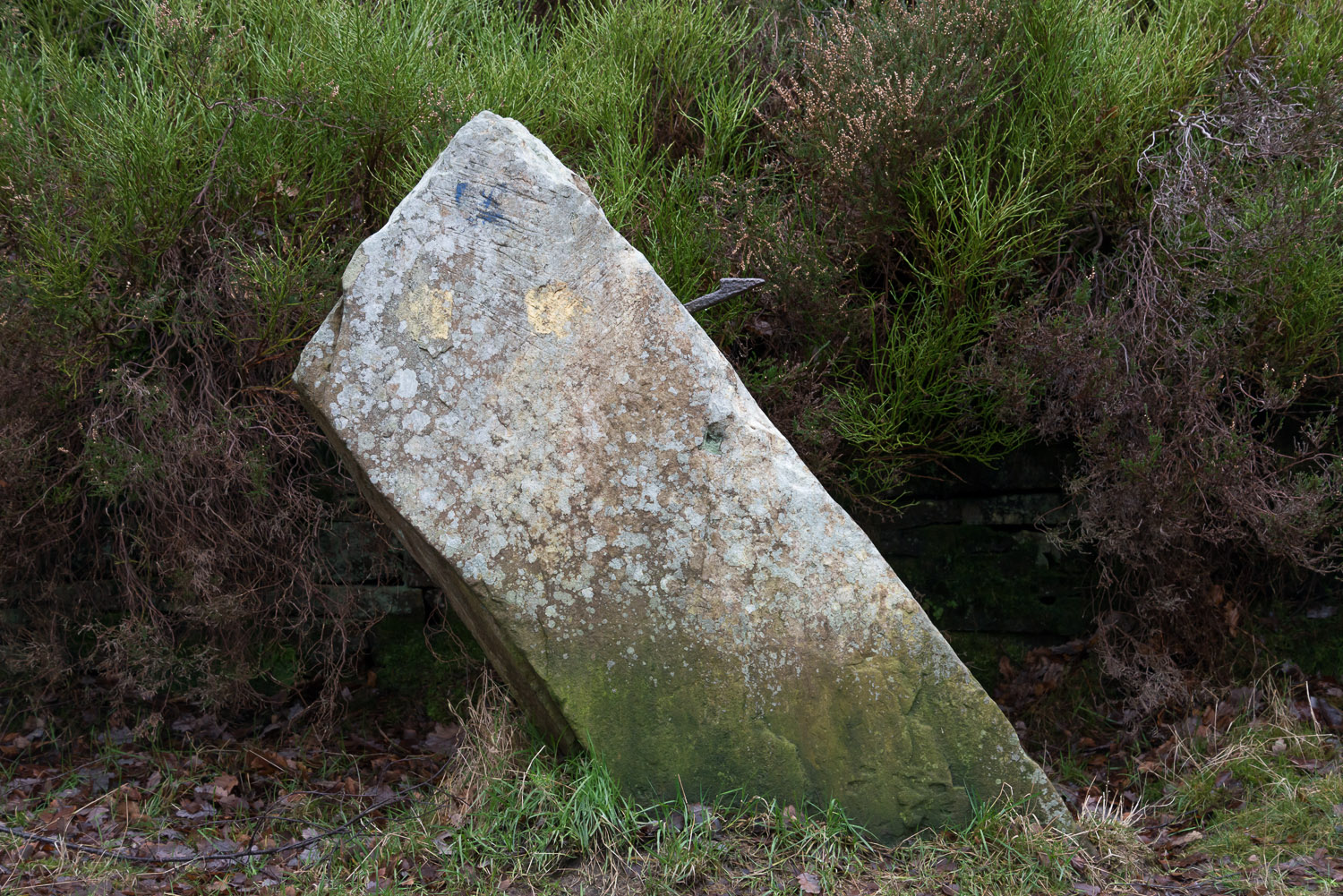
Homage to Usain “Homage to Usain”

It’s more than three years now since I completed the OCA Landscape module. My last assignment involved many visits to a particular site, where I had found resonance with Joel Meyerowitz’s photos of the 9/11 site.  It hasn’t changed much in three and a half years …
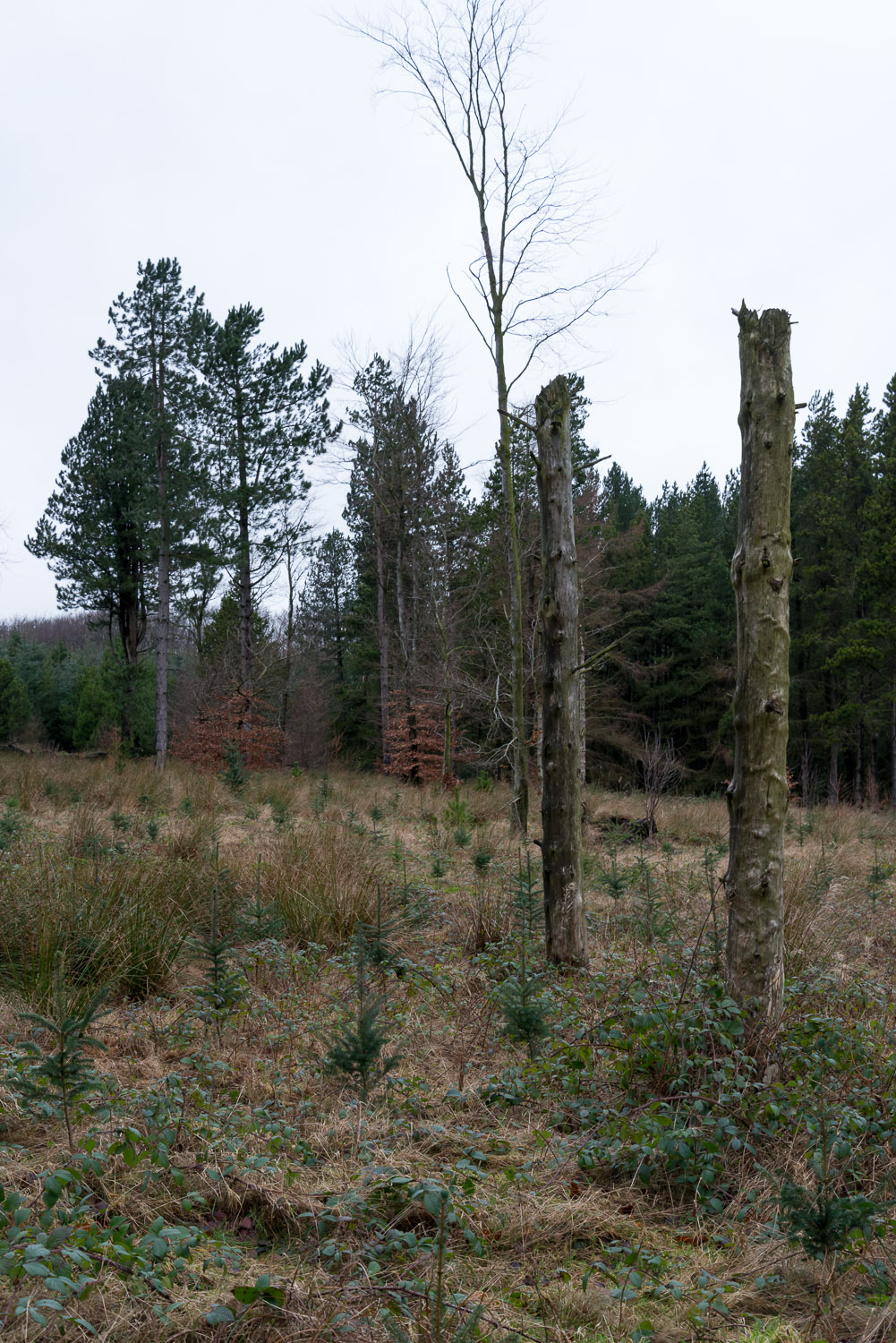
Revisiting Lanscape II

I took a version of this next image on a Level One module – Introduction to Digital Photography.  It was a more colourful, blue sky and autumnal version, but I think I prefer this one … still surreal, though, in a quite weird way.

Real Surreal

John Stezaker began his collages and film stills series (which I wrote about here) when he had a print of a film still upside down for years.  It had a reflection of a woman’s face in the shiny top of a grand piano.  I wonder what would happen if I turned this one upside down?
Part One – Genre

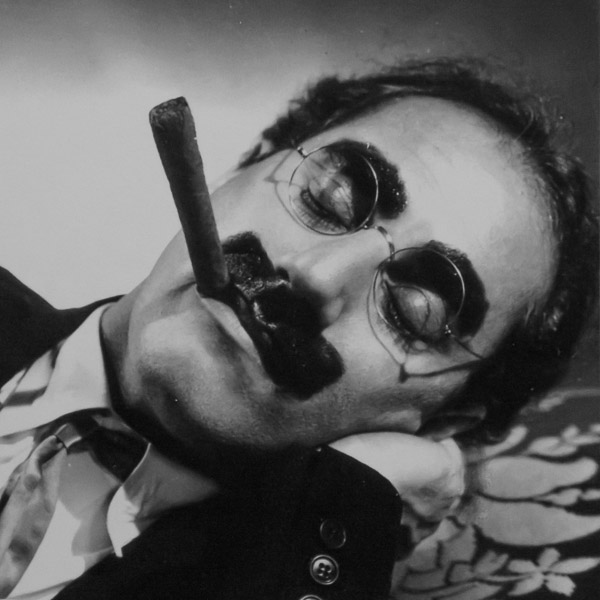
Groucho Marx (1 of 1)

I have always tended towards what one might describe as the ‘Marxist’ view of categorisation – Groucho, that is of course, not Karl – the ‘not wanting to join any club that would have me as a member’ approach. My problems with genres in Photography have been a) that it seems you have no sooner defined one than you find exceptions and contradictions; and b) that if you choose to ‘join’ a category, you become defined, and therefore restricted, by its ‘boundaries’. That this may have stemmed from some muddled thinking, I’m prepared to admit, but there has also been an element of suspicion that such ordering and defining of photographic images – even photographers – has stemmed from academic or archival convenience rather than ‘real’ value. Confession over, we move on to take a more serious view, in the context of the first section of ‘Body of Work’.

The course notes use a quotation from David Bate’s ‘Photography: The Key Concepts’ to summarise genre in Photography. I’ll repeat it:

“… a genre in photography – portraiture, landscape, still life, documentary, etc, – creates an expectation for the meanings to be derived from that type of photograph.” (Page 3)

Bate acknowledges that the notion of genre has been take up more frequently in film theory than in photography study, and also that photography has tended to be classified according to more traditional genres inherited from the field of painting – the first three listed in the quote, for example – but he also notes that:

Genres are processes which evolve and develop or mutate into hybrids.” (Page 4)

So he sees ‘Documentary’ as almost certainly a “… specific invention of photography.” The key seems to be that in theoretical study, the idea of genres enables all those involved – photographer, viewer, student, critic, or whatever – to share expectations and meanings. Crucially, in the context of one of my concerns expressed above, Liz Wells, in Chapter Six of ‘Photography: A Critical Introduction’, says that:

“… genres are defined not by uniformity, but by clusters of characteristic themes, formal and aesthetic concerns, and ideological preoccupations.” and “… are revitalised through aesthetic experimentation and … new issues ...” (Page 310)

It seems that genres are, perhaps, more fluid than I might have thought and that it is acceptable for them to evolve in line with contemporary issues and new ways of working.

Bate, in the rest of his book, stays with the traditional classifications – as listed above – though he does certainly look at the way photography has, at times, mutated and transformed them. Refreshingly, Part One of the ‘Body of Work’ module comes up with a different set of genres – suggesting a kind of matrix into which the traditional genres might be used. The genres looked at here are – Tableaux; Personal journeys and fictional autobiography; The archive; Psychogeography; Conceptual photography; and the ‘catch all’ Genre hopping. Some of these are familiar and some are new, but I do certainly see the potential for some refreshment of thinking in this approach. I can see how an exploration of some of these in my own work will potentially set me off on different tracks and or provide direction for ideas that are already around.

There is a reference in the notes to thinking with photography as opposed to thinking about photography. I felt a little uncertain about that when I first read it. I have sometimes been concerned that, despite studying a visual art, I perhaps think literally rather than visually, and that learning to do the latter could be difficult. I still feel a bit that way – but in reading the Wells’ chapter mentioned above, I came across a quote from Jeff Wall, in a section where Wells uses Landscape as a case study for looking at genre. She quotes Wall as saying “I make landscapes … to work out for myself what the kind of picture (or photograph) we call ‘landscape’ is. This permits me also to recognize the other kinds of picture with which it has necessary connections, or the other genres that a landscape might conceal within itself.” This, I suspect, is thinking with photography, and it encourages me to go out and explore some or all of the genres in the module with my own image-making.

First Tutor Contact & Some Initial Thoughts

Xmas Card 2013

More about this image later!!

I have read through the course notes twice now and, earlier in the week, had a good first conversation with Clive, my tutor. (That is not him in the illustration – to avoid any possible confusion.) As I said in the previous post, it seems essential to maintain an open mind at this stage as to where this major project will travel – and certainly about its destination. I do, as I emerge from my Level Two studies, have some broad ideas as to the general domain.

• I am keen to explore and exploit the potential of digital photographic image-making. And I expect to regard all aspects of digital photographic creativity as ‘at my disposal’ in seeking to create meaning.
• I will want – to an extent – to continue with the ‘studio-based still life’ work on which I focused towards the end of my last Level Two course.
• I can see more potential for exploration of ‘constructed’ images, and the bringing together of material from diverse sources to construct meaning in images.
• But, at the same time, I am concerned that I should not lock myself into an entirely ‘studio-bound’ approach.

I have discussed these thoughts with Clive and he is supportive of those ideas as very broad parameters within which to start out, but also stresses the ‘open mind’ approach. So we have agreed that I will set about taking some photographs/creating some images that interest me, over the next couple of months and then share a selection with him. It has also occurred to me, following the conversation, that, since the first part of the module explores ‘Genre’, I might use some of the defined genres as the starting point for some photographic exploration of my own. (I also see the digital focus as a broadly useful direction for ‘Contextual Studies’ when I get fully under way with that module – exploring the ways in which photography theory & visual cultural thinking in relation to photography has responded to the development of digital image-making and image-sharing, for example.)

Mentioning ‘Contextual Studies’ leads into one ‘procedural’ question that I have put to Clive and subsequently raised with OCA. For reasons that are understandable, there is a policy that, when an OCA student is undertaking more than one module at the same time, they should keep their studies identifiably separate and not allow overlapping of material. The Level Three Photography Handbook that came with the course notes makes more or less that point. However, since the three modules are inextricably linked, that seems like a principle that would be difficult to apply rigidly. ‘Contextual Studies’, I believe, is intended to explore the context in which ‘Body of Work’ is produced. So it would seem very odd, even counter-productive, to not refer to ‘Contextual Studies’ material in this Learning Log. I have asked the question.

And so to the illustration at the top of this post. It is primarily here to supply a bit of visual interest in an otherwise ‘dry’ opening early post and is actually my design for a Christmas card that my wife and I will be sending this year. However, it does illustrate a bit about where my image-making stands at this stage and has some value in the context of my bullet points about direction. It is constructed from photographs of illustrations from second hand books (resized and processed for this context); a photograph that I took locally of a building in Holmfirth; a miniature festive wreath and miniature parcel created by my wife; and a tiny model of a teddy bear. The photographs have been printed and cut, as necessary, with a craft knife, and the ‘set’ was assembled and lit in ‘studio-style’ to create this effect. Some subsequent digital processing created the warm light for the internal scene and added the number over the door, as well as preparing the image for print. It is a bit of fun, naturally, but I am genuinely interested in the multiple layers of meaning that can be created through this type of activity – and I would also acknowledge some influence from Abelardo Morell, whose work I have looked at and enjoyed in the last few weeks – http://www.abelardomorell.net/posts/alice-in-wonderland-2/

Starting Out

Course Notes

So, there it is, ready to go!

I’m not going to say too much in this opening post; it’s really about getting something started. I’ve had a first read through and the path ahead looks no less exciting than it did when I enrolled, I’m pleased to report. This module is, at present, a vast open space, into which I will place a ‘Body of Work’ that will be my final output from this creative journey – alongside my ‘Contextual Studies’, to which this blog will refer from time to time, I’m sure, and my efforts to publicise what I’ve produced, under the module title ‘Sustaining Your Practice’, which will follow in due course. I’ve started out on enough modules now to understand the mix of trepidation and anticipation that one feels at this stage. I really don’t have a clear idea of where this is going to lead, but I don’t think that matters just now – and ideas will begin to emerge and develop over the next few weeks/months. The next step is to have a preliminary chat with Clive, my tutor for this module, and I hope to arrange that shortly – after which there will, I’m sure, be more to say in here.

Until then …